
Aesthetics
🤍Cannula versus Needle in Dermal Filler Injections: Understanding Technique and Precision
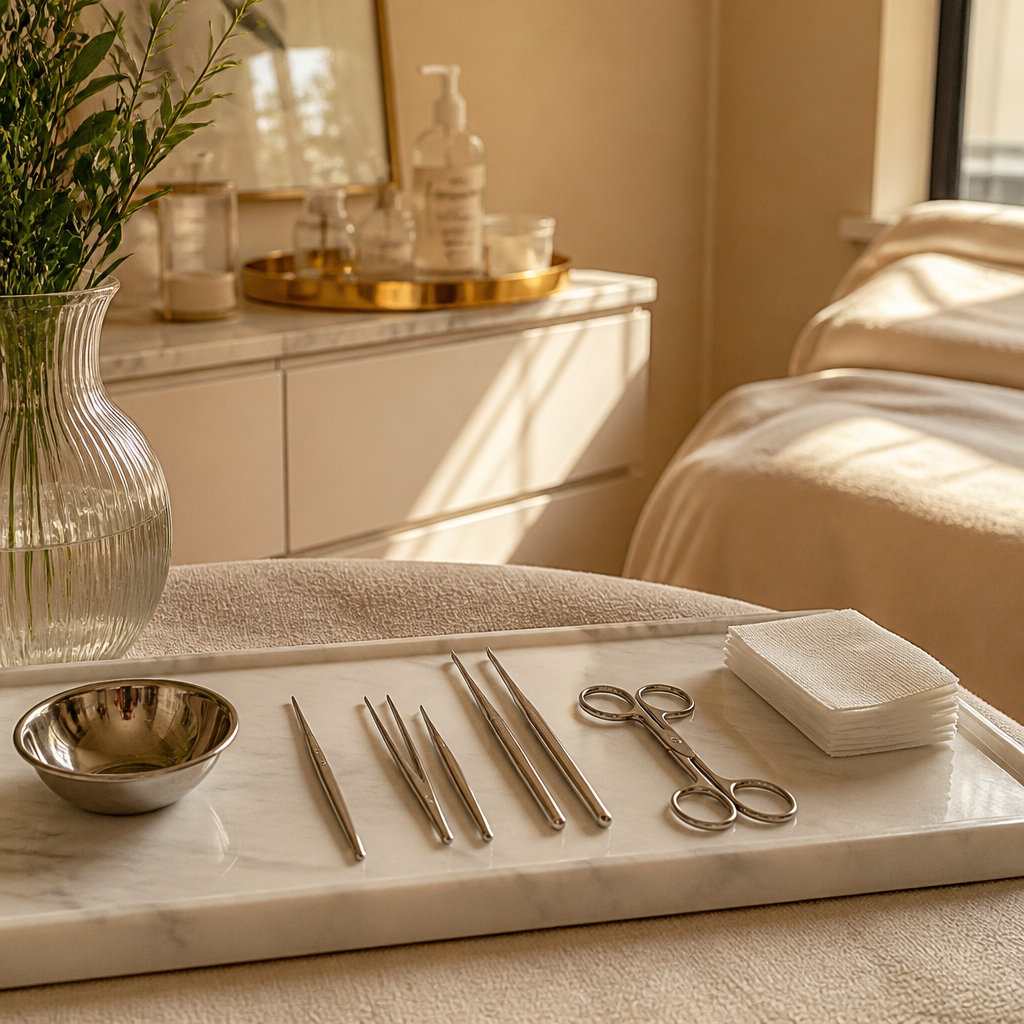
Dermal fillers remain among the most studied non-surgical procedures for facial balancing and subtle volume restoration. While public discussions frequently focus on the product formulation—such as hyaluronic acid density or cross-linking technology—the instrument used to deliver the product is equally consequential.
Historically, standard hypodermic needles were the sole method of placement. Over the past decade, the adoption of blunt-tip microcannulas has introduced an alternative technique that reshaped how practitioners approach facial anatomy. Understanding the physiological differences between these tools clarifies why an injector might choose one over the other, or combine both within a single session.
The Mechanics of Delivery
A traditional needle features a beveled, sharp point designed to pierce through tissue layers with minimal resistance. This sharpness allows for direct, highly targeted delivery into specific anatomical planes, from the deep supraperiosteal layer against bone to the superficial dermis.
In contrast, a microcannula is a flexible tube with an unsharpened, rounded tip. Because it lacks a cutting edge, it cannot pierce the skin independently. Instead, a small pilot hole is created with a traditional needle, allowing the cannula to enter and glide along natural tissue planes. Rather than severing small blood vessels and nerves, the blunt tip tends to push these structures aside as it advances.
Because of its length and flexibility, a cannula can often treat an expansive area—such as the midface or jawline—through just one or two entry points. A needle-only approach typically requires multiple punctures across the skin surface to achieve comparable coverage.
Safety Profiles and Tissue Response
The most significant advantage associated with cannulas is a reduction in mechanical trauma. In many clinical studies, cannula treatments correlate with lower rates of post-procedure erythema, swelling, and ecchymosis. For patients concerned with social downtime, this gentler tissue displacement offers a practical benefit.
From a safety perspective, the blunt tip also provides a mechanical safeguard against accidental intravascular injection. While a cannula does not completely eliminate the risk of vascular compromise—particularly when smaller gauge diameters are employed—it significantly decreases the likelihood of entering or shearing a vascular wall in high-risk zones.
However, cannulas are not without limitations. Navigating fibrous tissue or previous scar tissue can be challenging with a blunt edge, sometimes requiring excessive force that can diminish tactile feedback. In these scenarios, the controlled sharpness of a needle offers a cleaner, more predictable vector.
Matching the Instrument to the Anatomy
Clinical outcomes depend on matching the delivery instrument to the specific anatomical zone and depth required.
- Needles excel when maximum structural precision is necessary. Depositing tiny, cohesive aliquots directly onto bone—such as along the chin or deep pyriform space—often benefits from the perpendicular control of a rigid needle. They are also preferred for fine, superficial intradermal etching, where a cannula cannot easily maneuver.
- Cannulas are frequently favored in delicate regions with complex vascularity or loose subcutaneous architecture. The tear troughs, temple hollows, and lateral cheeks often lend themselves to smooth retrograde threading via a cannula, creating an even layer without surface irregularities.
- Lip augmentation can be performed successfully with either tool, and many practitioners use a hybrid technique depending on whether they are refining the vermilion border or restoring central mucosal volume.
Ultimately, neither tool is universally superior. A comprehensive aesthetic consultation evaluates facial symmetry, soft tissue thickness, and individual vascular patterns to determine the appropriate instrumentation. In the hands of an experienced physician, needles and cannulas are complementary tools, selected purposefully to prioritize safety and natural harmony.
Want to talk about this with a physician?
Schedule a consultation