
Aesthetics
🌿Understanding Biostimulatory Injectables: A Guide to Sculptra and Radiesse
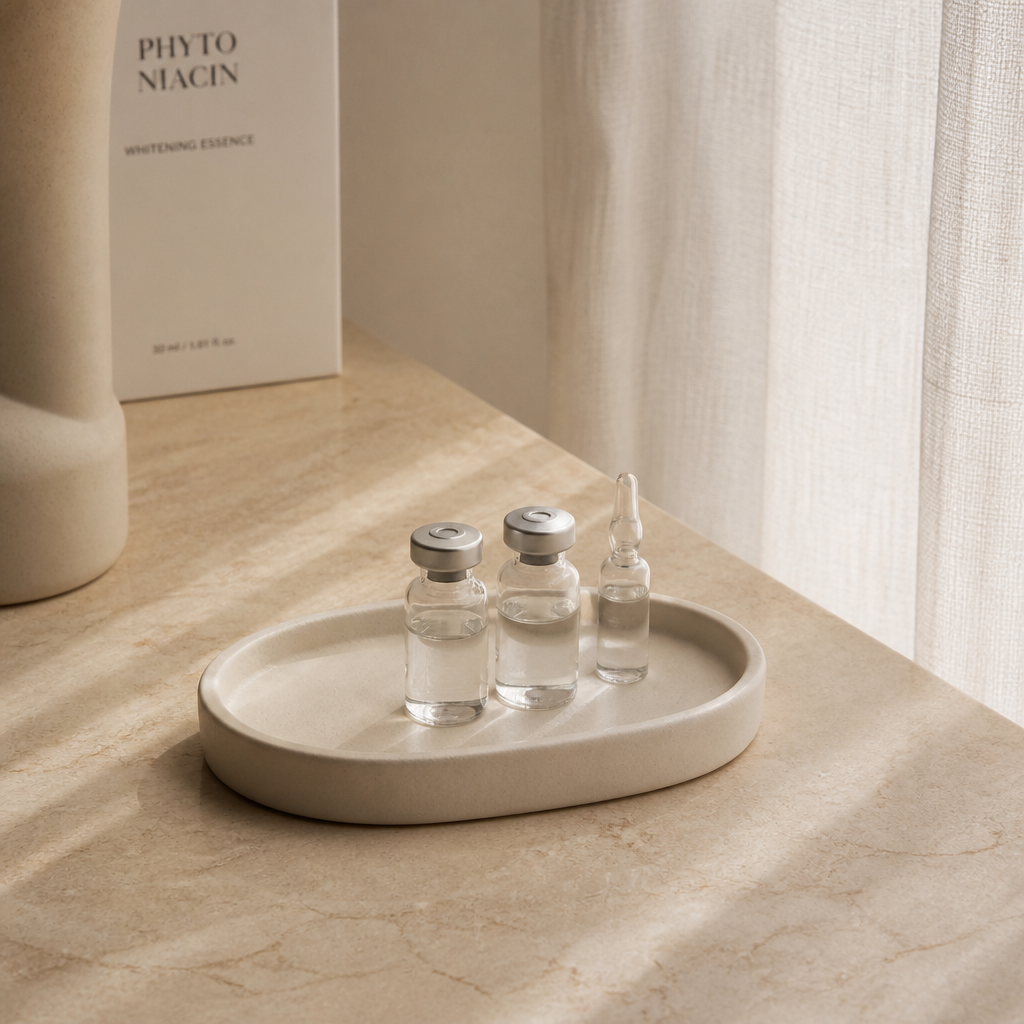
Over the past decade, aesthetic medicine has undergone a quiet yet significant paradigm shift. While traditional hyaluronic acid fillers remain valuable for immediate focal volumization, many individuals now seek outcomes that feel less like an addition and more like an authentic restoration. This desire has brought biostimulatory injectables, particularly Sculptra and Radiesse, to the forefront of regenerative aesthetic care.
Biostimulators are fundamentally different from standard gel fillers. Rather than simply occupying space beneath the skin, these agents serve as biological catalysts. When placed thoughtfully within specific tissue planes, they prompt the body's fibroblasts to synthesize new type I and type III collagen, as well as elastin, over a period of months.
The Mechanism of Natural Tissue Regeneration
As skin matures, intrinsic aging and environmental factors cause an annual reduction in dermal collagen density. This structural attrition manifests as subtle hollowing, laxity, and a gradual loss of tissue spring. Biostimulators work through a controlled, subclinical biological response that addresses this root architectural decline.
Once injected, the active micro-particles disperse within the sub-dermal or deep structural layers. Tissue macrophages recognize these biocompatible particles and recruit fibroblasts, the cells responsible for structural matrix production. Over time, the injected material is naturally and completely metabolized through standard enzymatic pathways, leaving behind an organized lattice of newly formed, native collagen. The result is structural rejuvenation achieved from within, avoiding the abrupt alteration of facial contours.
Sculptra and Radiesse: Comparative Nuances
While both agents share the primary objective of neocollagenesis, their biochemical compositions and clinical behaviors offer distinct advantages depending on anatomical needs.
- Sculptra (Poly-L-Lactic Acid): Sculptra consists of biocompatible micro-particles of poly-L-lactic acid (PLLA). It provides minimal initial volume once the sterile water carrier is absorbed in the days following injection. Instead, its primary strength lies in diffuse, progressive structural rebuilding. Sculptra is well-suited for broader areas of temporal, pre-auricular, and midface volume loss, as well as improving overall skin thickness and tensile strength across several planned sessions.
- Radiesse (Calcium Hydroxylapatite): Composed of smooth calcium hydroxylapatite (CaHA) microspheres suspended in a carboxymethylcellulose gel carrier, Radiesse provides dual action. In its standard formulation, it offers immediate structural projection alongside prolonged collagen stimulation, making it effective for defined jawlines and deep structural support. When hyper-diluted with saline and lidocaine, Radiesse transitions into a powerful skin-conditioning agent, delivered more superficially to address crepiness and laxity in the neck, décolletage, and hands without adding visible volume.
A Considered, Physician-Led Plan
Because biostimulators rely entirely on your body's cellular response, outcomes evolve gradually over several weeks and typically peak around the three to six-month mark. Longevity often extends well beyond eighteen to twenty-four months, reflecting the stable nature of genuine tissue remodeling.
This gradual timeline requires both practitioner expertise and patient patience. A physician-led evaluation ensures that biostimulatory treatments are appropriately matched to your unique facial anatomy, soft tissue health, and metabolic factors. By prioritizing biology over rapid alteration, Sculptra and Radiesse offer an understated, enduring approach to natural structural vitality.
Want to talk about this with a physician?
Schedule a consultation